

What to Know Before Buying a Wall-Hung Toilet
A wall-hung toilet requires a compatible bowl, carrier, tank and actuator plan. Confirm wall depth, structural support, service access and installation instructions before closing the wall.
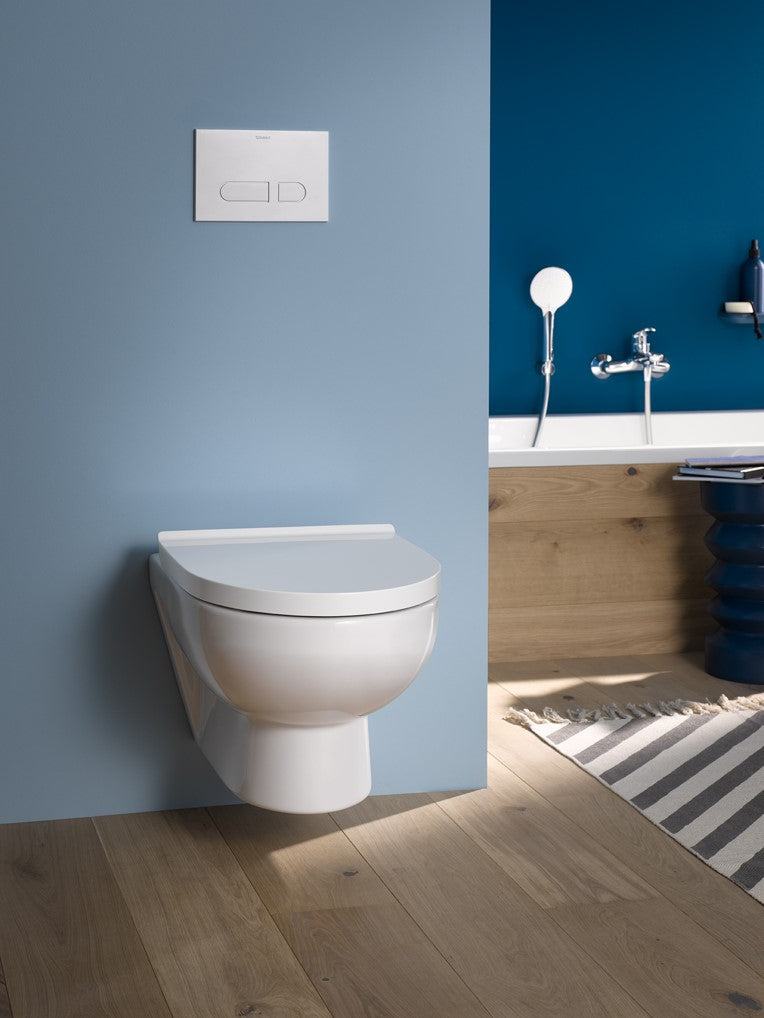
A wall-hung toilet requires a compatible bowl, carrier, tank and actuator plan. Confirm wall depth, structural support, service access and installation instructions before closing the wall.
Understand the components
A typical installation includes a wall-hung bowl, an in-wall carrier and tank, a flush actuator plate and the appropriate connections. Verify what the selected package actually includes.
Manufacturer reference: TOTO explains rough-in measurements, seat-height terminology and model-specific toilet selection. Confirm the exact toilet’s dimensions and installation requirements before ordering. See TOTO’s product FAQ.
Check the wall
Carrier requirements vary. A qualified installer should verify framing, finished-wall depth, plumbing routes and permitted loading according to the manufacturer's instructions.
Plan servicing access
The flush plate often provides access to internal tank components, but service arrangements differ. Review parts availability and access before closing the wall.
Think about finish and cleaning
The elevated bowl makes the floor beneath easier to reach. Confirm bowl dimensions, mounting height, seat compatibility and available finishes.
What should you verify before ordering this toilet?
The shopping list is longer than the visible bowl
Many wall-hung installations involve the bowl, seat, concealed flush tank/carrier, actuator plate, drain and supply connections, plus approved fixings. Packaging varies widely. The Kohler Veil listing below illustrates the visible fixture; the in-wall carrier listing illustrates a distinct hidden component. These are examples of different parts, NOT a claim that those two SKUs form an approved set. Only pair components expressly permitted in manufacturer compatibility documentation.
Work out the wall before choosing a finish
Your installer must know the finished wall depth, available stud or masonry structure, waste position, servicing access and desired mounting height. The carrier has structural load and anchoring requirements. Moving an existing floor outlet to a wall-hung system can involve more plumbing work than swapping between conventional floor-mounted toilets, so confirm scope and budget before placing the order.
Questions to settle with the contractor
Where will the flush mechanism be serviced? Which flush actuator plate is compatible with the carrier? What will be accessible after tiling? Does the bowl require a specific seat? Which additional seals and mounting parts are needed? A complete bill of materials is much more useful than comparing bowl prices alone.
Plan the entire system, not just the visible bowl
Start with a parts schedule listing the bowl, in-wall tank and carrier, compatible flush actuator, seat, connector and necessary mounting components. The carrier and bowl must form an approved configuration. An attractive flush plate cannot be assumed to fit every concealed tank, even when the finish looks right.
Ask the installer about load support, finished wall depth, waste and supply locations, and how internal tank parts will be accessed after the wall is finished. If you are replacing a floor-mounted toilet, the drain route may need major changes. A wall-hung system can be very rewarding in a full renovation, but rarely behaves like an ordinary swap.
Toilets and accessories worth a closer look
Explore the models discussed here, with attention to rough-in, bowl height, water use and included components.


Need to confirm a fit? Have the installer check the manufacturer drawing and your measurements before placing an order. That is usually less costly than returning a fixture after installation work begins.
Frequently asked questions
Is a wall-hung toilet suitable for any wall?
No. The specific carrier requires suitable structural conditions and installation.
Can I pair any bowl with any in-wall tank?
No. Only use combinations explicitly approved by the manufacturer.
How do you service a concealed tank?
Many systems provide access behind the flush plate, but the actual service method depends on the chosen model.


Leave a comment
This site is protected by hCaptcha and the hCaptcha Privacy Policy and Terms of Service apply.