

Single-Bowl vs. Double-Bowl Kitchen Sinks: Choosing a Layout
A single bowl provides one uninterrupted washing area; divided bowls separate tasks. Compare usable bowl dimensions, cabinet fit and drain layout rather than outside width alone.
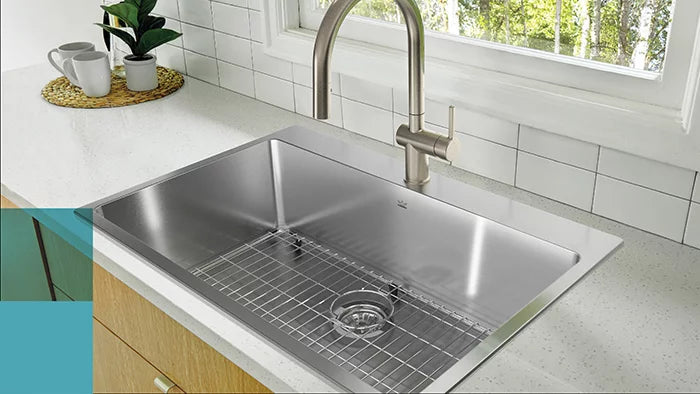
A single bowl provides one uninterrupted washing area; divided bowls separate tasks. Compare usable bowl dimensions, cabinet fit and drain layout rather than outside width alone.
When a single bowl makes sense
One uninterrupted basin can accommodate baking trays, large pans and oversized dishes more easily. Consider the overall bowl depth and reach.
When divided bowls make sense
Separate compartments can support rinsing, soaking and food preparation at the same time. Check the actual dimensions of each compartment.
Plan accessories
Grids, cutting boards, strainers and drying racks can extend the utility of either design. Verify they fit the model before buying.
Think beyond the bowl
Cabinet fit, drain placement, faucet reach and dishwasher proximity can affect daily use as much as bowl count.
How do sink dimensions and care affect daily use?
Think in terms of usable bowl space
A single basin lets you move large roasting trays or stock pots without a central partition. A double bowl gives you two work zones but each compartment is narrower. The BLANCO Liven low-divide layout is another option for separating small tasks while allowing some clearance across the middle. Study the actual interior dimensions and divide height, rather than the marketing label alone.
Consider the way your family uses the sink
If you frequently wash sheet pans, evaluate a large single bowl such as the Kohler Strive. If handwashing and rinsing happen at the same time, a divided Franke Kindred Brookmore may be convenient. The right answer depends on your cookware, dishwasher use and kitchen habits, not on a universal rule about one or two bowls.
Account for plumbing and accessories
A double-bowl arrangement can have different drain or accessory requirements from a single bowl. Verify drain positions, minimum cabinet dimensions, grid sizes and faucet reach. If two people share the preparation area, visualize where cutting boards, colanders and drying racks will sit before selecting the final bowl arrangement.
Manufacturer reference: BLANCO describes material and accessory options for its stainless-steel sinks. Check the exact model’s specification for configuration and accessory compatibility. See BLANCO’s stainless-steel sink guidance.
Try a simple kitchen-use test
Think about the largest pan or baking sheet you wash by hand. Would it lie comfortably in one basin, or would a divider get in the way? Next consider how often two tasks happen at the same time: one person rinsing vegetables while another washes dishes. This may favour separate work zones. Neither answer is more correct without knowing the household.
Check drain positions and usable bowl widths, particularly for 60/40 and low-divide designs. A wide exterior sink can still have one small compartment. Review bottom grids, cutting boards and colanders if you want to use the basin as a workspace, and confirm the faucet's spray reaches the required areas.
Kitchen sinks and related essentials
Compare the sink configurations mentioned here, including bowl dimensions, mounting details and cabinet requirements.


Next step: Share the exact sink and cabinet dimensions with your countertop fabricator or installer before ordering or cutting a counter.
Frequently asked questions
Do double bowls require a bigger cabinet?
Not always. Compare the exact sink's minimum cabinet requirement.
Can a low-divide sink hold a large pan?
It may accommodate some larger items more easily, but check the actual bowl and divider dimensions.
Does a single bowl need a different drain?
Drain and accessory requirements depend on the specific sink and plumbing layout.


Leave a comment
This site is protected by hCaptcha and the hCaptcha Privacy Policy and Terms of Service apply.